

When managing a fleet of commercial trucks, understanding the difference between normal wear and tear and chargeable damage is critical—especially during lease turn-ins or resale preparation. Misinterpreting these terms can lead to unexpected costs, downtime, and frustration. This guide breaks down the differences and shows how Fleet Fast can help you avoid costly surprises.
What Is Normal Wear and Tear?
Normal wear and tear refers to the expected, gradual deterioration that occurs from everyday use. Leasing companies and fleet operators typically accept these signs without extra charges. Common examples include:
- Minor surface scratches that don’t penetrate the paint layer
- Light scuffs on bumpers or side panels
- Small chips or cosmetic paint blemishes
- Interior wear on seats or flooring from regular use
- Minor decal shadowing after branding removal
- Small dents under 1 inch with no paint damage
These issues indicate the truck has been used as intended and generally do not affect safety or structural integrity.
What Counts as Chargeable Damage?
Damage goes beyond normal use and often results from accidents, improper handling, or neglect. This type of damage impacts safety, performance, and resale value—and will almost always result in additional charges at lease turn-in. Examples include:
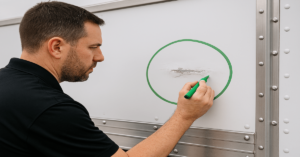
- Box truck corner damage or crushed panels
- Roof punctures or leaks
- Deep scratches, gouges, or cracked panels exposing bare metal
- Liftgate damage or hydraulic issues
- Bent rails, door frames, or thresholds
- Large dents or structural problems
- Interior holes, broken step wells, or mirror damage
- Rear doors that won’t open or close smoothly
- Any unrepaired collision damage
These conditions require professional repair to restore the truck to safe, functional condition.
Why the Distinction Matters
Leasing companies use these definitions to assess end-of-term charges. Normal wear and tear is factored into your agreement, while damage leads to costly penalties. Knowing the difference helps you:
- Avoid surprise fees at lease turn-in
- Plan repairs proactively to minimize downtime
- Maintain fleet value for resale or redeployment
Fleet Fast: Your Partner in Damage Control
We’ll inspect your unit and provide:
- A damage vs wear-and-tear assessment
- Photos & documentation
- A repair estimate
- Recommendations to reduce your turn-in bill
No obligation. No cost. Just transparency.
Tips for Fleet Managers
- Document truck condition regularly with photos and inspection reports
- Train drivers on proper handling and loading practices
- Schedule preventive maintenance to catch issues early
- Use protective measures like bed liners and decals to reduce wear